Health & Wellness

Let's be honest: when someone on your team says "we should make a video," a little part of you dies inside. You're already stretched between grant reports, donor thank-yous, that one board member who wants to "personally review" every social post, and a website that hasn't been updated since 2019. Adding "learn video production" to your to-do list sounds like a nightmare.
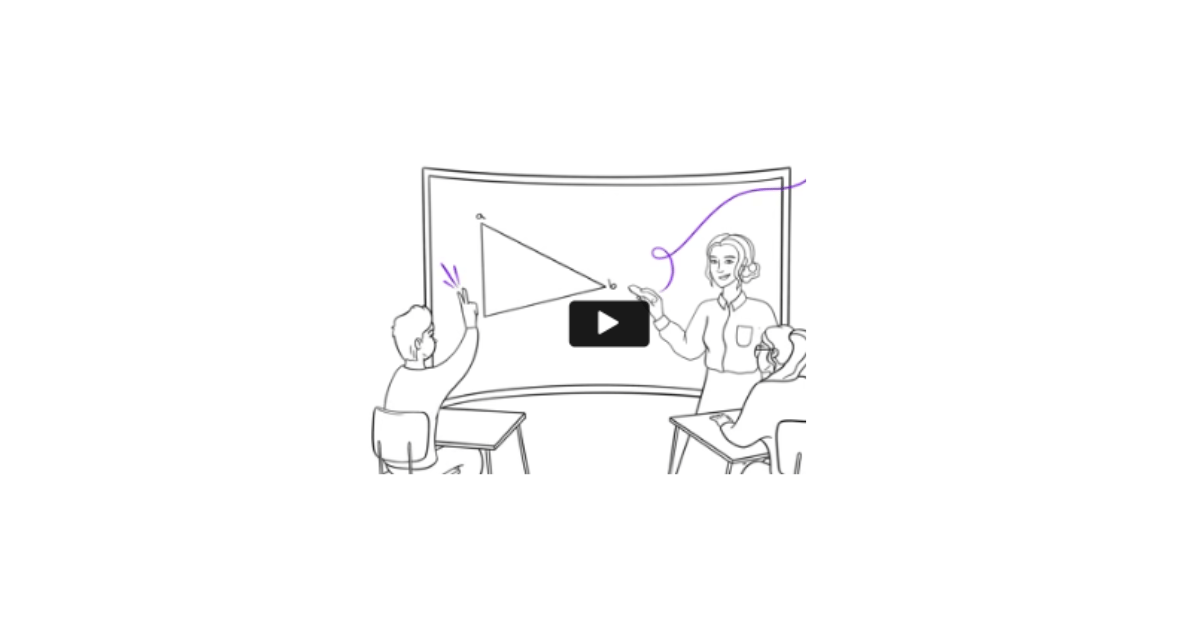
Here's the good news: you don't need a camera crew, a script doctor, or a budget that rivals your annual gala. You need a whiteboard explainer video — those charming animated videos where a hand seems to sketch out your story in real time, usually set to a friendly voiceover. They're cheap(er), fast(er), and shockingly effective at doing the one thing every nonprofit struggles with: making people actually understand — and care about — what you do.
Here are ten reasons whiteboard explainer videos deserve a spot in your content plan this year.
You live inside your mission every day, so it feels obvious to you. It is not obvious to a first-time visitor who lands on your homepage with eight seconds of attention to spare. Whiteboard videos force you to distill your work into a clear, sequential story — problem, solution, impact — because the format simply doesn't work if you ramble. That constraint is a gift. If you can't explain your program in 90 seconds of whiteboard sketches, that's useful information about your messaging, not the video format.
You can tell someone "we served 12,000 meals last year" and they'll nod and forget it by lunch. Show them a hand drawing a hungry kid, then a volunteer, then a plate of food, then a smiling family — and suddenly that stat has a face. Visual storytelling sticks in memory in a way that bullet points never will, and whiteboard animation is basically visual storytelling on easy mode.
Not every nonprofit is rescuing puppies or planting trees. Some of you are explaining tax policy implications for low-income families, watershed management, or the finer points of restorative justice. Whiteboard videos are uniquely good at making dry, complex, or wonky subject matter feel approachable, because the visual sketching keeps people engaged even when the content is dense. It's the format equivalent of a spoonful of sugar.
Confusion kills conversions. If a potential donor has to work to figure out what you do, how their money is used, or why it matters, most of them will simply bounce rather than dig deeper. A well-made explainer video on your donation page removes that friction. It answers "what is this and why should I care" before the donor even has to ask the question, which means more people make it to the "donate" button instead of abandoning ship.
Nobody is reading your 1,200-word "About Us" page start to finish. They're scrolling. A 60-to-90-second video embedded near the top of that page catches attention in a way that a wall of text never will, and it respects your audience's actual attention span instead of fighting it. Put the video first; let the text be for the people who want to go deeper.
This is the part nonprofit marketers really love: whiteboard explainer videos are workhorses. Use the full video on your homepage. Cut it into three 15-second clips for Instagram and TikTok. Embed it in your annual appeal email. Play it on a loop at your gala check-in table. Send it to a corporate sponsor as your "why partner with us" pitch. Show it during new-volunteer orientation so you stop giving the same 20-minute spiel every single month. One production cycle, content for an entire quarter (or year) across every channel you touch.
Compared to live-action video — which means booking talent, scouting locations, renting equipment, and hoping nobody's dog barks during the shoot — whiteboard animation is typically far cheaper and faster to produce. No casting, no location permits, no reshoots because the lighting changed. For an organization watching every dollar (which, let's be real, is all of you), that cost difference matters.
Tool we recommend: If you're ready to try making one yourselves (or just want to see what's possible before hiring it out), InstaDoodle is a solid place to start — it's built specifically for whiteboard-style animation, so you don't need design or motion-graphics experience to put together something polished. (Affiliate link — if you sign up through it, we may earn a small commission at no extra cost to you.)
Live-action video ages the moment fashion, hairstyles, or your office decor change. Illustrated whiteboard style doesn't carry that same expiration date. A whiteboard video explaining your core mission can realistically run on your homepage for a couple of years without looking dated, which means better ROI on the time and money you put into making it.
Pairing a clear voiceover with simple, sequential visuals and on-screen captions makes your message land for a wider range of audiences — including people who process information better audibly, people with low literacy in your primary language, and people watching on mute in a crowded coffee shop (which, let's face it, is most of your Instagram audience). Good captioning and a clear script make your explainer video one of the more inclusive tools in your content toolkit.
Ever watch a board member fumble through explaining your mission at a networking event? It's not their fault — most people weren't handed a clean, memorized elevator pitch. A whiteboard video does that work for you. Share it internally, and suddenly your board, your volunteers, and your newest hire are all telling a consistent, compelling version of your story, because they've literally watched it happen in 90 seconds. Consistency in messaging across an organization is hard to achieve through a memo. It's much easier to achieve through a video everyone has actually watched.
You don't need a Pixar budget or a marketing department the size of a Fortune 500 company to make people understand — and feel something about — your mission. A well-scripted whiteboard explainer video is one of the highest-leverage pieces of content a resource-strapped nonprofit can produce: relatively cheap, endlessly repurposable, genuinely engaging, and built to make your case in the time it takes someone to wait for their coffee order.
If your mission is still living entirely in a text-heavy About page or a slide deck nobody outside your team has seen, it might be time to hand it to a whiteboard and a good voiceover artist instead.